 Certified Transmission

Recently, a 2019 Jeep Cherokee AWD with the 3.2L engine was towed into our shop for a grinding noise. The customer said someone had cut her off, forcing a sudden stop. When she tried to take off again, the vehicle would not move. Her immediate concern was getting it moving again without creating another problem, and ours was finding the cause of the failure.
We pushed it into the shop and found the left front axle shaft broken. It had not failed in the usual way: the splined portion had snapped off at the hub. We completed our normal checks - fluid, leaks, codes and the rest of the basic inspection - and found C10D0, electronic park brake system failure, stored in the PCM. I recommended replacing the axle shaft, then testing transmission operation afterward.
After replacing the axle shaft, I drove the Cherokee about 10 miles to make sure everything worked well. The transmission worked properly, as expected. Back at the shop, I rechecked the fluid level and leaks and performed a final scan. C10D0 had reset and was turning on the check engine light, but no other modules had codes. Out of curiosity, I tested the electronic parking brake; it applied and retracted normally. With no apparent problem, I left it alone and recommended the customer have the code investigated by the dealer or a general repair shop.
When she came to pick up the vehicle, she saw the check engine light and returned to ask about it. We explained the code, and she said the CEL had not been on before the vehicle was towed. Since it appeared after our repair, we decided to help her out and investigate further.
During research, my manager found information online recommending a battery disconnect and touching the cables together for a period of time to reset the system. I found a Stellantis TSB directing us to reprogram the PCM for this code. I chose to disconnect the battery cables first, hoping to try the least expensive, simplest step before programming.
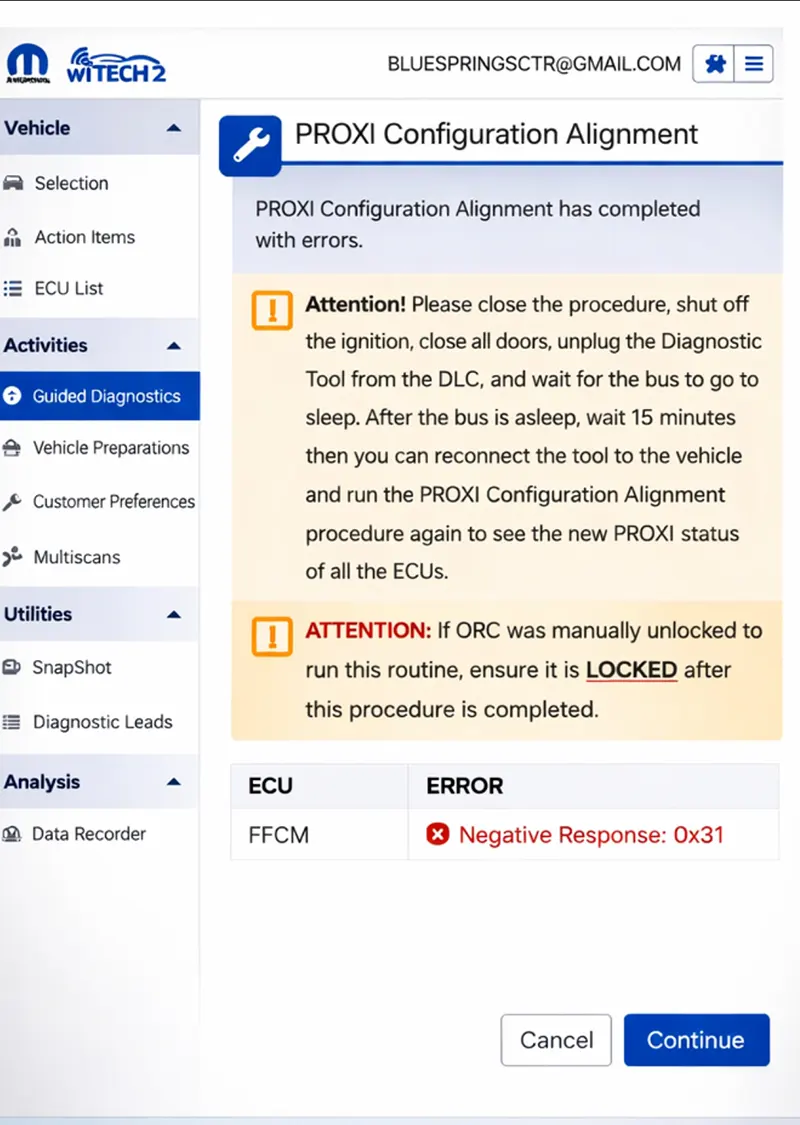
After reconnecting the cables and rescanning, C10D0 was absent, but B2204-55, ECU configuration mismatch, not configured, was present. After another key cycle, C10D0 returned and the odometer began flashing. I was confused by the new code. Research showed that a module had lost its PROXI alignment status. In Wi-Tech's PROXI alignment tool, the front-facing camera module was identified as the problem. My alignment attempt failed to configure the module. (Figure 1)
I set that aside long enough to address the brake code. The PCM was eligible for the TSB update, and programming completed without issue. I rescanned the vehicle, cycled the key several times, and C10D0 was gone. At least that portion of the repair seemed resolved.
I returned to the PROXI issue and ran the alignment several more times, all unsuccessfully. We explained the situation to the customer and arranged another appointment so we could spend more time with it. I hoped an overnight rest would let the modules sleep and correct the issue, but it did not. It never works out that way.
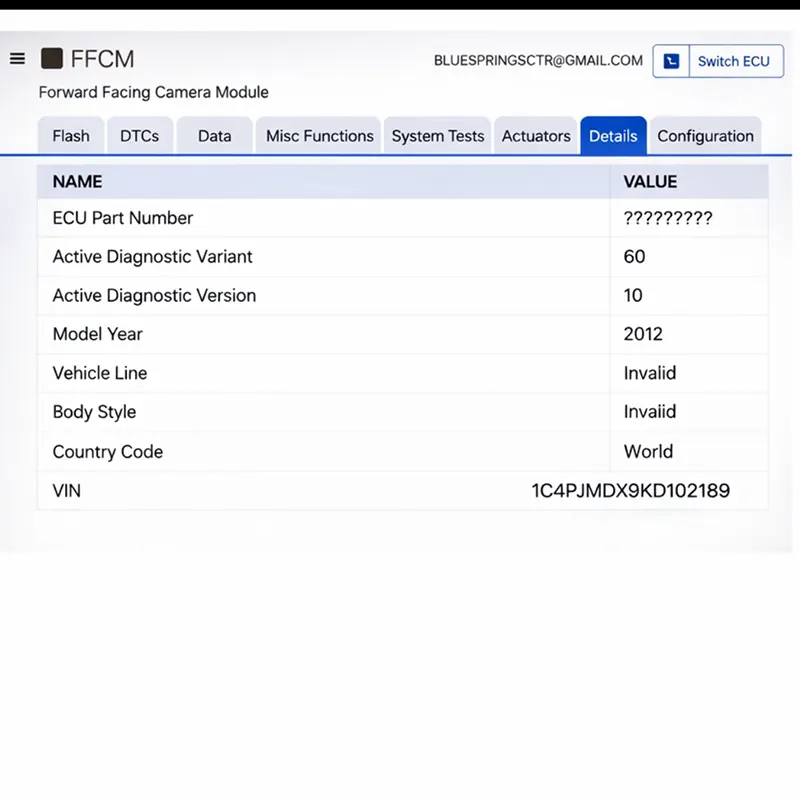
At her appointment, I got the Cherokee back into the shop and we researched additional reasons for an alignment failure, including an installed used module or outdated calibration. Another TSB addressed the flashing odometer and an out-of-date FCCM. Wi-Tech showed no available calibration update. The module reported its calibration number as ????????, the vehicle as a 2012, and its vehicle line and body style as invalid, although the VIN was correct. I considered that, without alignment, the vehicle might not recognize the module well enough to show its proper information. In other words, the vehicle did not yet seem to know the module. (Figure 2)
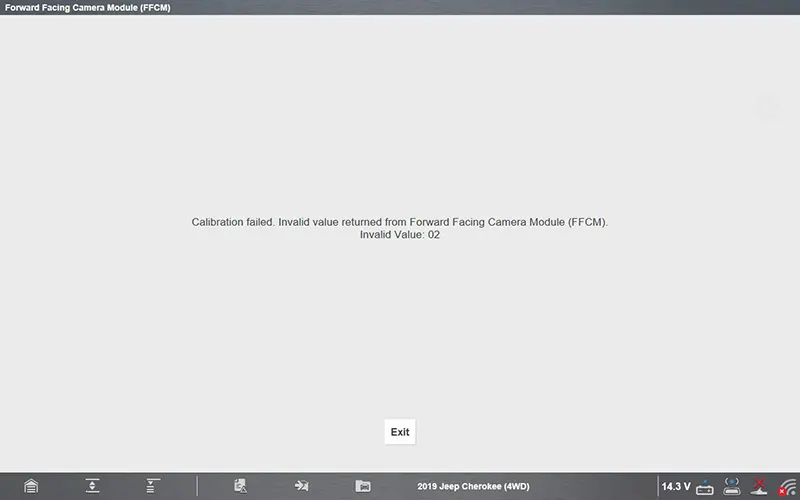
We brought out our Alpha-OBD tool to see whether it could perform the PROXI alignment or reveal a setting that would allow it. After considerable time working through the vehicle and its settings, it still would not perform as needed. I discussed it with my manager, and we concluded the module itself was likely faulty, so we ordered one. It arrived a few days later. (Figure 3)
When the new module arrived a few days later, I jumped right into replacing it, installed it in the windshield bracket and went straight to Wi-Tech. This time, the PROXI alignment completed all the way through. Finally, the process finished as it was supposed to.
One of my techs helped with the approximately five-minute drive learning procedure, using a scan tool and an extra set of eyes to monitor the process. I then drove the vehicle several more times to confirm operation. The adaptive cruise control worked as it should, no dash lights were on, and after several drive cycles I was confident the Cherokee was ready to go.
I parked it in front of the shop and performed a post-scan. That is when the auto start-stop malfunction, ABS and traction control lights came on - a Christmas tree. C10D0 had set in the PCM again. After all the work and successful drive cycles, any confidence I had was drained. The problem had returned at the exact moment I thought the vehicle was finished.
I cleared the codes and cycled the parking brake on and off. Once the code cleared, I began another post-scan. As the scan reached the electronic park brake module, all the lights returned. That provided the clue: during a pre-scan or post-scan with our Snap-on Zeus, something in the software did not like scanning through the EPB module and set C10D0 in the PCM.
In the end, the entire issue likely began when the scan moved through all the modules. It could have been avoided had I not followed my normal procedure. The experience was a reminder that even routine steps can produce an unexpected result. Hopefully this helps someone facing a similar situation.